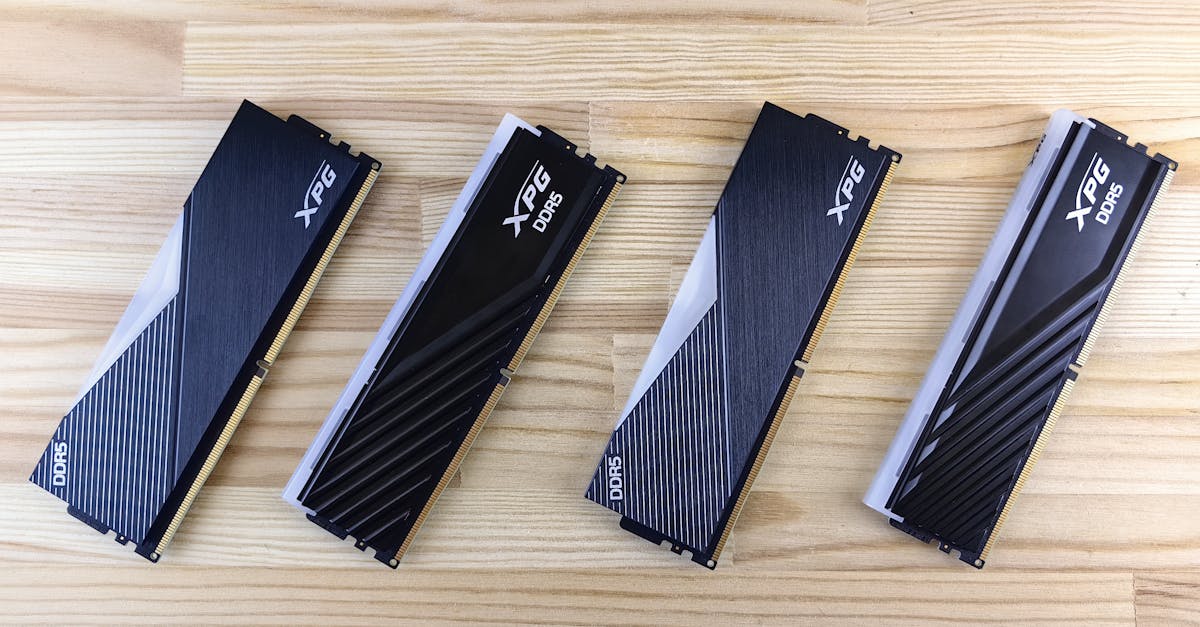
ECC DDR5 Is a Half‑Measure That Leaves SaaS Infrastructures Exposed
Lede
DDR5 modules now ship with on‑die ECC that vendors market as a built‑in safety net, but the specification only provides 8 bits of correction per 128‑bit data word [3]. For SaaS operators running large fleets of servers, that leaves a gap between the marketing promise and the actual error‑coverage needed to prevent silent data corruption, costly reboot storms, and compliance headaches.
The Reality
Traditional server ECC uses a wider bus (72 bits for DDR4, 80 bits for DDR5) and implements Hamming codes that can correct single‑bit errors and detect double‑bit errors across the full data width [1]. DDR5’s on‑die ECC, mandated by JEDEC, sits inside each DRAM die and corrects only single‑bit errors that occur within the chip before data leaves the module [3]. It does not add extra bits to the bus, so it cannot protect against multi‑bit errors that span chips or against a whole‑device failure.
The spec also introduces two ECC variants for RDIMMs: EC4 (36 bits of data per 32‑bit subchannel) and EC8 (40 bits per subchannel) [1]. EC8 enables a full Hamming code on each 32‑bit subchannel, effectively giving ChipKill‑style protection for a 64‑bit word, while EC4 only offers a stripped‑down check that may rely on subchannel parity alone. Vendors claim all DDR5 RDIMMs are EC8, but market listings show EC4 RDIMMs for sale [1], and some servers (e.g., Dell R760) allow only one variant per system [1]. UDIMMs, the form factor used in many entry‑level servers and workstations, are typically EC4, meaning they lack the independent subchannel checks needed for robust multi‑bit protection [1].
ChipKill, the IBM‑trademarked technique that tolerates an entire DRAM chip failure, requires either an advanced ECC algorithm or duplicate bits across chips [1]. On‑die ECC alone does not provide ChipKill; it merely masks single‑bit flips inside each die. The Google study on DDR/DDR2 memory errors shows that multi‑bit and chip‑level failures, while less frequent, still contribute a non‑trivial fraction of system‑level crashes [5]. Without ChipKill, those errors can propagate to the CPU, causing silent data corruption or system hangs.
The Pain Point
For IT directors and SaaS architects, the financial and operational impact of insufficient memory protection appears in three ways:
- Increased debugging overhead – Intermittent bit‑flips that are not corrected by on‑die ECC manifest as sporadic application crashes or filesystem corruption. The author’s own experience with BTRFS corruption and Memtest86+ showing one error every five hours illustrates how such faults can masquerade as software bugs, wasting developer and SRE time [1].
- Higher total cost of ownership – To mitigate the gap, teams either over‑provision with more robust (and pricier) ECC RDIMMs or invest in extra monitoring, error‑scrubbing, and frequent memory testing. EC4 UDIMMs are cheaper up front but may force costly replacement cycles when errors accumulate [1].
- Risk of silent data loss – In distributed SaaS platforms, a single corrupted memory word can lead to divergent replica states, broken consensus logs, or corrupted backups that go unnoticed until a restore is attempted. Mozilla’s observation that up to 15 % of Firefox crashes stem from RAM hardware errors [7] underscores how even client‑side memory faults can translate to server‑side data integrity issues when those errors affect cached requests or session data.
Failure Modes
The main failure modes stem from the mismatch between on‑die ECC’s capabilities and real‑world error patterns:
- Multi‑bit errors within a 64‑bit word – On‑die ECC corrects only single‑bit errors per chip. A two‑bit error affecting two different chips (common with row‑hammer or power‑supply noise) will be detected as an uncorrectable error, potentially triggering a machine check exception and a hard crash.
- Whole‑chip failure – If a DRAM die fails entirely, on‑die ECC cannot reconstruct the missing data; the module will return stale or random bits, leading to silent corruption unless the system has ChipKill or memory mirroring.
- Subchannel incompatibility – Mixing EC4 and EC8 RDIMMs in the same server is prohibited on many platforms [1], creating a hard compatibility barrier that complicates upgrades and spare‑part management.
- Vendor opacity – The exact interaction between on‑die ECC and any side‑band ECC the motherboard may implement is not publicly documented, leaving open the possibility that the two layers interfere and reduce overall effectiveness [1].
The Blueprint
To close the gap, SaaS operators should adopt a concrete, checklist‑driven approach:
- Audit current memory inventory – Identify which modules are UDIMMs vs RDIMMs, and note their EC4/EC8 labeling (often found on the module’s SPD or vendor datasheet). Replace any EC4 UDIMMs in production servers with EC8 RDIMMs where the platform supports them.
- Enforce a procurement rule – Only purchase DDR5 RDIMMs that explicitly state EC8 support and, preferably, ChipKill or advanced ECC (often labeled “Advanced ECC” on Dell/HP spec sheets). Treat EC4 UDIMMs as non‑server‑grade and restrict them to non‑critical workloads or development boxes.
- Enable error scrubbing and logging – Activate the memory controller’s scrubbing feature (if available) and configure the OS to log corrected errors. Use tools like
edac-monitoron Linux to track trends; a rising correction rate is an early warning of deteriorating DIMMs. - Plan for ChipKill or mirroring – For workloads that cannot tolerate any silent corruption (e.g., primary databases, consensus layers), consider memory mirroring or RAID‑1‑style memory configurations offered by some server vendors, or fall back to older DDR4 ECC RDIMMs with proven ChipKill implementations if DDR5 EC8 supply is constrained.
- Educate incident responders – Include memory‑error diagnostics in runbooks: when a reproducible crash or filesystem corruption occurs, first run Memtest86+ or the vendor’s memory diagnostics before diving into application logs. This reduces mean‑time‑to‑innocence (MTTI) and prevents wasted engineer hours.
Sources
- ECC and DDR5 – etbe.coker.com.au
- Is DDR5 ECC Memory? – Corsair
- DDR5 ECC Explained: On‑Die ECC vs Side‑Band ECC – ATP Inc.
- DDR5 ECC Memory – Lenovo US
- Penguin Solutions launches 64GB DDR5-6400 ECC CSODIMM – StockTitan
- Penguin Solutions Expands SMART Modular DDR5 SODIMM Memory Portfolio – Yahoo Finance
- Bit flips cause up to 15% of Firefox crashes – Tom’s Hardware