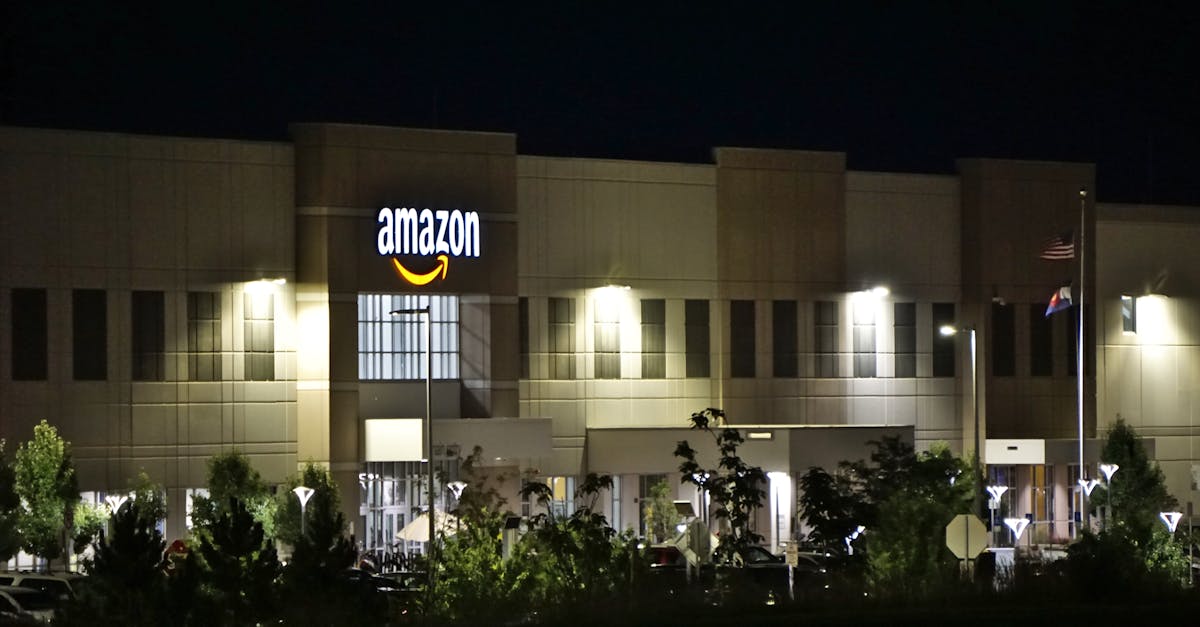
Costco and Amazon represent opposite ends of the retail spectrum. Amazon pours capital into a sprawling fulfillment network that promises near‑infinite assortment and two‑day delivery. Costco, by contrast, curates roughly 4,000 SKUs per warehouse – a fraction of the ~130,000 SKUs found in an average Walmart Supercenter – and relies on members to haul bulk pallets home. This intentional constraint is not a short‑coming; it drives volume, speeds inventory turnover and reduces overhead.
The financial impact is stark. Costco’s Form 10‑K shows selling, general and administrative (SG&A) expenses at about 10 % of net sales – a level the analyst calls “consistently lower” than its peers【1】. Amazon’s delivery‑related costs, by contrast, exceed 40 % of non‑AWS sales according to a Phenomenal World analysis of the retailer’s cost structure【2】. The disparity translates directly into pricing power: Costco can offer members rock‑bottom prices on bulk items while still maintaining healthy margins.
Member loyalty further amplifies the advantage. Yahoo Finance reports that Costco’s annual membership renewal rate typically sits above 90 %, underscoring the brand’s stickiness despite the inconvenience of long checkout lines and limited choice【3】. High renewal rates smooth revenue streams, lower customer acquisition costs and reinforce the economies of scale that keep SG&A low.
Operational simplicity also yields labor benefits. Costco’s “depots” cross‑dock entire pallets with minimal automation – trucks unload on one side, workers on electric pallet jacks transfer pallets directly to outbound trucks. No break‑down, conveyor belts or complex sortation systems are needed. This lean model allows the retailer to pay front‑end associates an average $21.29 hour – higher than Walmart’s $16.23 and Amazon’s $19.14 – while keeping turnover at just 6 %, dramatically below the 60 % retail average【4】. Higher wages and lower churn reduce recruiting costs and improve service consistency.
From a strategic perspective, Costco’s approach challenges the prevailing narrative that more choice and faster delivery are inherently superior. The bulk‑purchase model shifts the “last‑mile” burden to consumers, cutting delivery‑vehicle mileage and associated fuel and emissions. For enterprises contemplating public‑grocery pilots or low‑cost supply‑chain redesigns, the lessons are clear: limit assortment, centralize volume and prioritize strong supplier relationships to achieve a short cash conversion cycle without alienating partners.
The trade‑off is obvious – shoppers forgo the instant gratification of doorstep delivery for lower prices, a social shopping experience and predictable costs. For IT directors and architects, the implication is that technology investments should focus on efficient cross‑docking, inventory visibility and member‑centric data platforms rather than costly micro‑fulfillment labs that echo Amazon’s endless‑choice model.
In sum, Costco’s disciplined SKU strategy, disciplined SG&A, and high renewal rates deliver a resilient, low‑cost retail engine that scales without the massive logistical overhead that defines Amazon’s growth. For organizations weighing the future of retail logistics, simplicity may prove more sustainable than complexity.
Sources
- Costco Form 10‑K – SG&A at 10 % of sales — https://d18rn0p25nwr6d.cloudfront.net/CIK-0000909832/1d2e9494-f590-4908-8d5f-dac2a6a3f51d.pdf
- Thermidor in the Retail Revolution – Amazon delivery costs >40 % of sales — https://phenomenalworld.org/analysis/thermidor-in-the-retail-revolution/
- Yahoo Finance – Costco membership renewal rate above 90 % — https://finance.yahoo.com/news/costcos-renewal-rate-slips-89-132600457.html
- Indeed salary data – Costco front‑end associate $21.29 hour and turnover 6 % — https://www.indeed.com/cmp/Costco-Wholesale/salaries/Front-End-Associate